
Official website · Latest pricing & offers
Quick answer: what ‘IGK hair tutorial’ usually means
An IGK hair tutorial is usually not one single routine. It can mean learning how to use IGK color products, root touch-up sprays, dry shampoo, smoothing stylers, curl products, or finish-and-extend formulas in a way that fits your actual hair goal.
This guide is a practical roundup, not a duplicate of IGK’s brand-owned how-to videos. I’ll point out where you should follow official IGK guidance exactly—especially for color—and where I’m adding general beauty-editor styling advice from testing at-home workflows.
Who this guide is for
This IGK hair tutorial is for beginners who want clear steps before using a product, especially if you’ve ever bought a styling product and then wondered, “Wait, do I use this on wet hair or dry hair?”
It’s also helpful if you’re comparing IGK categories before shopping. IGK’s official navigation includes collections like Cleanse + Condition, Prep, Air Dry, Curls, Style, Finish + Extend, Color Upkeep, Dry Shampoo, Frizz Control, Texture + Waves, Hydrate, Repair, Volume + Thickening, Hold + Finish, and Color + Care.
What you’ll learn in 7 tutorials
You’ll get an igk hair tutorial step by step for seven common use cases:
- Permanent color at home
- Color depositing masks for tone refresh
- Root and scalp touch-up spray
- Smoothing stylers for sleek looks
- Volume or thickening stylers
- Dry shampoo for refreshed roots
- Curl, air-dry, and finishing routines
For more general hair-care basics, you may also want to read Head to Toe Well’s guide to building a simple healthy hair routine.
How to choose the right IGK product for your goal
Start with the result you want, not the product name. Permanent color is for a bigger color commitment, a color depositing mask is for color upkeep, root touch-up is for temporary blending, and styling products are for texture, smoothness, lift, curls, or hold.
If you are unsure about shade selection, IGK’s official site offers tools such as Find Your Perfect Shade and Book A Virtual Consultation. Those are especially useful before attempting an igk hair tutorial for grey hair or any permanent color change.
What to know before you start using IGK products
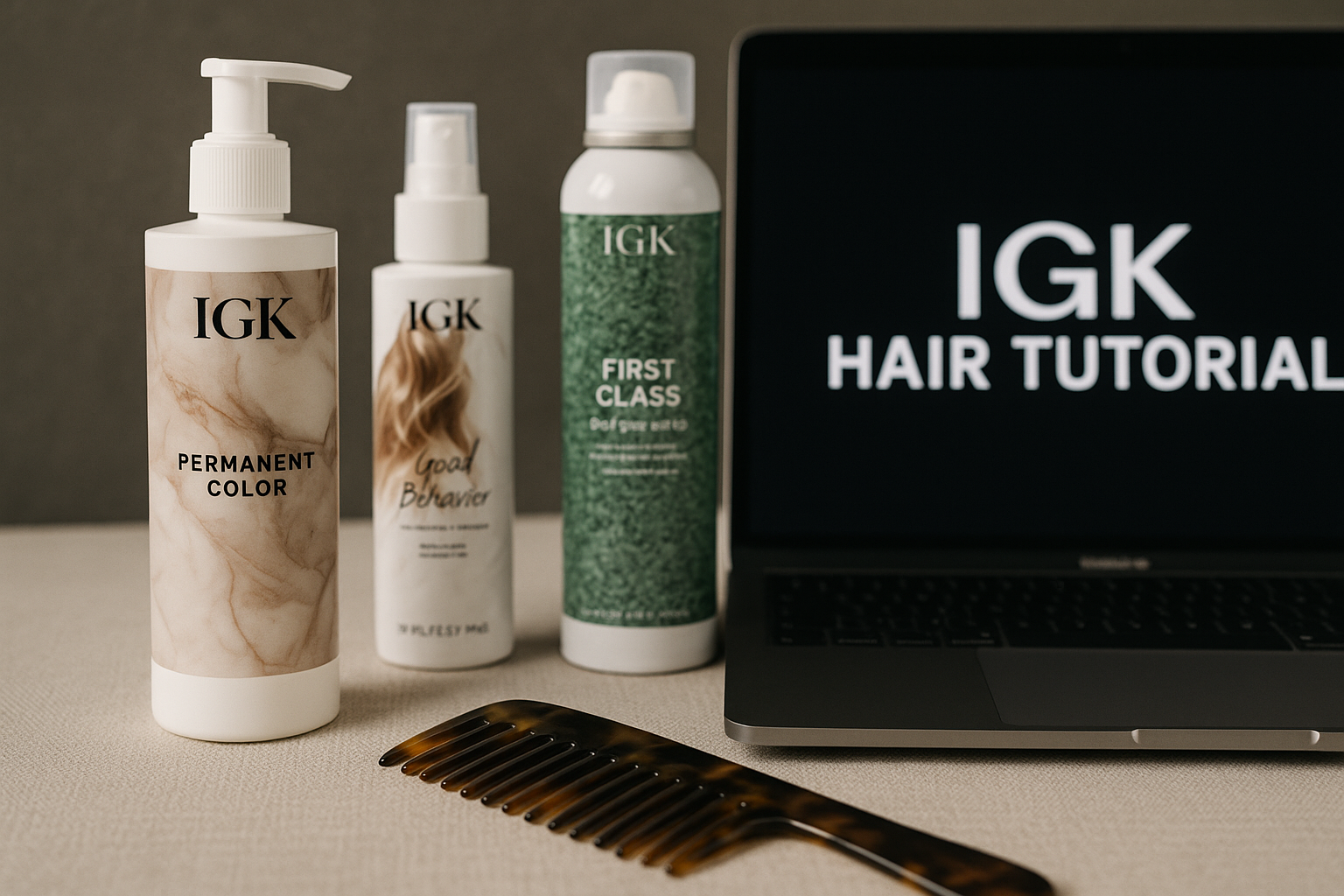
Before any IGK hair tutorial, set up your space. Most beginner mistakes happen before product even touches the hair: poor sectioning, applying too much, skipping label directions, or rushing timing.
Hair prep basics
For styling products, decide whether your hair should be damp, wet, or dry based on the product label. Root touch-up and many finishing products are typically used on dry hair, while some prep, curl, air-dry, or smoothing formulas may be used before styling.
For color products, do not guess. Always follow the package directions exactly because permanent color, color depositing masks, and root touch-up products are different categories with different use patterns.
Tools and materials you may need
For most tutorials, I like to set out tools before starting. It keeps the process calmer and helps avoid uneven application.
| Goal | Helpful Tools |
|---|---|
| Permanent color | Clips, gloves, timer, old towel, barrier product if included or directed |
| Color mask | Wide-tooth comb, gloves if recommended, dark towel |
| Root touch-up | Hand mirror, tissue, small brush for blending after dry |
| Smooth blowout | Comb, blow-dryer, brush, heat tool if needed |
| Volume | Clips, round brush, blow-dryer |
| Dry shampoo | Brush, towel, mirror |
| Curls or air-dry | Clips, microfiber towel, diffuser if using heat |
How to patch test or strand test color products
For any color-focused IGK hair tutorial, patch and strand testing are worth taking seriously. Follow the exact testing instructions on the product packaging, especially if you are new to at-home color or using a new shade.
A strand test helps you preview color outcome and timing on a small piece of hair. A patch test helps you follow safety guidance before applying product more broadly.
Safety and timing reminders
Use a timer instead of estimating. With color, rinsing too early or leaving product on longer than directed can affect the result.
Do not mix IGK color products with unrelated products unless the instructions specifically tell you to. If your scalp is irritated, recently treated, or you are unsure about color chemistry, consider using IGK’s virtual consultation tool or asking a licensed stylist before proceeding.
Tutorial 1: How to use IGK Permanent Color Kit at home
This IGK hair tutorial is the most detailed because permanent color requires the most care. IGK’s official content includes Permanent Color Kit tutorials, and you should treat the box instructions as the authority.
Best for: gray coverage or all-over color refresh
The Permanent Color Kit is best suited for someone who wants a more committed color result than a temporary spray or tone-refreshing mask. If you searched for an igk hair tutorial for grey hair, this is the section to read carefully—but shade choice matters.
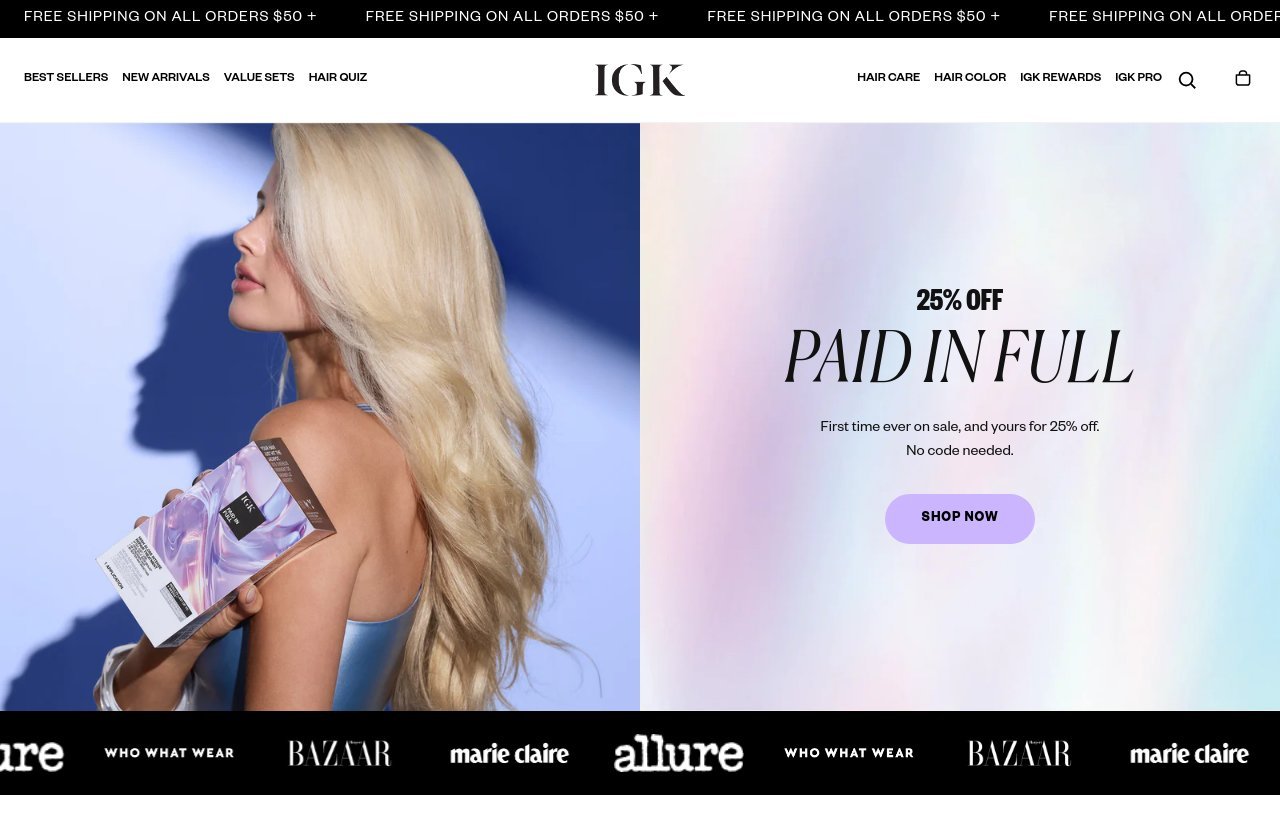
Use IGK’s Find Your Perfect Shade or Book A Virtual Consultation tools before buying if you are unsure. For current product availability and pricing, check the official site; the verified shipping promo states free shipping on orders $50+.
Step-by-step application flow
Here is the general flow for how to use igk hair dye, based on standard box-color workflow and the verified IGK tutorial context:
- Read the full instruction leaflet before mixing anything.
- Put on gloves and protect clothing and surfaces.
- Section hair into four parts.
- Apply barrier gel along the hairline if included or instructed.
- Mix the color and developer exactly as directed.
- Apply according to the instructions, focusing on even saturation.
- Set a timer for the directed processing time.
- Rinse until the water runs clear.
- Cleanse with shampoo as directed by the kit.
That is the safest way to approach an igk permanent color kit tutorial without improvising.
How to section hair and apply barrier gel
Sectioning is where at-home color either becomes manageable or messy. Create a center part from forehead to nape, then another part from ear to ear, making four quadrants.
Clip each section securely. Apply barrier gel along the hairline if your kit includes it or the instructions call for it, avoiding the hair you intend to color.
When to rinse and cleanse
Rinse only when the package timing tells you to. Use lukewarm water and continue rinsing until the water runs clear.
Then cleanse with shampoo as directed. Do not add extra treatments, masks, or styling products until you know what the instructions recommend immediately after coloring.
Tutorial 2: How to use IGK Color Depositing Mask for tone refresh
An IGK hair tutorial for a Color Depositing Mask is different from permanent color. Think of this as color upkeep or tone refresh, not a full permanent dye service.
Best for: fading color, enhancing shine, or adding tone
The IGK Color Depositing Mask sits in the color upkeep world. It may be a better starting point than permanent color if your main issue is dullness, fading, or wanting to refresh tone between bigger color appointments.
If you are unsure which shade direction to choose, verify through IGK’s official shade resources first. Avoid assuming that a mask will behave the same way on every base color.
Application tips for even saturation
For an igk color depositing mask tutorial, even saturation is the goal. Work in sections, apply from the areas that need the most refresh, and use a wide-tooth comb only if the product label supports that method.
Wear gloves if the instructions recommend them. Use an old towel because color upkeep products can be messier than regular conditioner.
How long to leave it on
Follow the product label exactly for timing. Do not extend processing time just because you want a stronger result.
Hair porosity, previous color, and starting shade can all influence how a color mask appears. A strand test is a smart move before applying it everywhere.
How to maintain results
Use the Color Depositing Mask as directed rather than every time you wash unless the label says that is appropriate. Overuse can make tone look heavier than intended.
For more upkeep ideas, see Head to Toe Well’s guide to making hair color last longer.
Tutorial 3: How to use IGK Root & Scalp Touch-Up Spray for in-between days
This IGK hair tutorial is for the person who notices roots five minutes before leaving the house. Root & Scalp Touch-Up Spray is a color-upkeep product, not permanent dye.
Best for: roots, part lines, and quick gray blending
Use this when you want temporary blending around the part, hairline, temples, or crown. It is especially relevant if you want an igk root touch up tutorial for in-between salon visits or between permanent color applications.
This is not the same as changing your all-over color. It is a targeted finishing step.
How to target the hairline and crown
Start with dry, styled or mostly styled hair unless the label says otherwise. Hold the product at the distance recommended on the packaging, then apply lightly to the visible root area.
Use short bursts instead of one heavy spray. I find it easier to build gradually than to correct an overapplied patch.
Drying and styling after application
Let the product dry before touching, brushing, or changing clothes. Once dry, you can gently blend edges with fingertips or a small brush if that works with your hair texture.
Avoid spraying too close to the scalp. That usually creates a concentrated spot instead of a soft blend.
Avoiding transfer and buildup
Use only where you need coverage. If you keep layering touch-up spray daily without cleansing, buildup can make roots feel coated.
On wash day, cleanse the scalp thoroughly. For scalp-friendly routine ideas, read Head to Toe Well’s guide to washing oily roots without drying your ends.
Tutorial 4: How to use IGK Good Behavior or other smoothing styler for sleek looks
This IGK hair tutorial focuses on smoothing and polish. IGK’s official navigation includes Frizz Control and Style categories, and Good Behavior is commonly associated with sleek styling, but always verify the exact product label before use.
Best for: frizz control and blowout-like shine
A smoothing styler is best when your goal is a sleeker finish, less puffiness, or a more polished blowout effect. This is not a replacement for color care or repair; it is a styling step.
For an igk smoothing tutorial, your biggest decision is placement. Most smoothing products work best when applied away from the scalp unless the label says otherwise.
How to apply from mid-lengths to ends
Start with a small amount. Apply from mid-lengths to ends, then use what remains on your hands to lightly touch the outer layer.
Avoid loading product at the roots. That can make hair look flat or oily, especially if your strands are fine.
Heat-styling workflow
If the product is intended for heat styling, apply as directed before blow-drying or using a hot tool. Follow any heat-related instructions on the label.
A simple workflow is: prep, section, blow-dry with tension, then finish only where needed. This keeps the style smooth without stacking too many products.
How to layer with other products
Layering works best when each product has a job. For example, use a prep product first, a smoothing styler before heat, and a finishing product only at the end.
If your hair gets greasy quickly, skip heavy finishing layers. The cleanest IGK hair tutorial is often the one with fewer steps.
Tutorial 5: How to use IGK volume or thickening stylers for fuller hair
An IGK hair tutorial for volume is all about placement. IGK’s official categories include Volume + Thickening, so shop in that family if your goal is lift, body, or fuller-looking styling.
Best for: limp roots and flat styles
Volume stylers are best for hair that collapses at the crown or lacks shape after drying. They are usually most effective when applied close to the root area, but always check the product directions.
If your ends are dry, avoid putting root-lifting products through the full length. Keep the lift where you need it.
Where to apply for lift
Apply in horizontal sections around the crown, front hairline, and any flat areas. Use less product at first.
For fine hair, overapplication is the fastest way to lose volume. The goal is support, not stiffness.
Round brush or blow-dry tips
Lift each section up and away from the scalp while drying. A round brush can help shape the front pieces and crown.
Let sections cool before touching them. Cooling helps the style set better than brushing everything out while still warm.
How to keep volume lasting
Finish with a light hold product only if needed. Too much shine spray or smoothing product can collapse the lift you just created.
For more body-building basics, see Head to Toe Well’s guide to adding volume to fine hair.
Official website · Latest pricing & offers
Tutorial 6: How to use IGK dry shampoo for a refreshed style
This IGK hair tutorial is one of the easiest to try first. IGK has a verified Dry Shampoo category, and dry shampoo is ideal when your roots look oily but your lengths still look wearable.
Best for: oily roots and extending wash day
An igk dry shampoo tutorial is useful on second-day or third-day hair, after a workout, or before restyling. It is not a full cleanse, but it can help refresh the look and feel of roots between washes.
Use it before your hair looks extremely oily if possible. Preventive application often blends better than emergency application.
How to spray or powder correctly
Apply to dry roots. Section the hair and target the scalp area rather than misting the outer layer only.
Use short, controlled sprays if it is an aerosol format, or light taps if it is a powder format. Follow the specific product instructions.
Massage, wait, and brush out
Let it sit briefly before massaging. This waiting step is the beginner mistake I see most often skipped.
After it has had time to settle, massage roots with fingertips and brush through if your hair type allows. Curly hair may do better with gentle shaking or targeted root massage instead of brushing.
How to avoid white cast or buildup
Use less than you think you need, then add more only if necessary. Holding spray too close can create visible residue.
If you notice buildup, wash your scalp thoroughly on your next cleanse. Dry shampoo is for extending a style, not replacing shampoo indefinitely.
Tutorial 7: How to use IGK curl, air-dry, and finish products for a complete style
This IGK hair tutorial brings several categories together. IGK’s official navigation includes Air Dry, Curls, Texture + Waves, Hold + Finish, and Finish + Extend, which makes it easy to build a complete routine by goal.
Best for: waves, curls, and air-dry routines
A curl or air-dry routine is best when you want shape without fighting your natural texture. For an igk curl tutorial, focus on moisture level, product order, and how much you touch the hair while it dries.
Waves and curls usually look better when product is distributed evenly. Rushing this step can create flat roots and coated ends.
Order of product application
A simple order is:
- Prep or leave-in product if using one
- Curl, wave, or air-dry styler
- Texture or hold product if needed
- Finishing product after hair is dry
Do not use every product in the IGK lineup at once. Pick one main styler and one finishing product if needed.
Scrunching, diffusing, or air-drying
Apply product to damp hair as directed, then scrunch upward. For waves, avoid aggressive towel rubbing because it can disturb the pattern.
If diffusing, use low or moderate airflow and move slowly. If air-drying, keep hands out of the hair until it is mostly dry.
Finishing sprays for hold and shine
Once dry, assess what the style needs. Use hold if the shape is falling, texture if it looks too soft, or a shine-oriented finish if the ends look dull.
The best IGK hair tutorial for curls is not the longest one. It is the routine your hair can handle without becoming sticky, flat, or overworked.
Which IGK tutorial should you start with?
Choosing the right IGK hair tutorial depends on your goal, hair type, time, and comfort level. Here’s the quick decision matrix I would use before buying or opening a product.
By hair goal
| Goal | Start With |
|---|---|
| Cover visible roots temporarily | Root & Scalp Touch-Up Spray |
| Refresh fading tone | Color Depositing Mask |
| Change or refresh permanent color | Permanent Color Kit |
| Reduce frizz and polish a blowout | Smoothing styler |
| Add body | Volume + Thickening styler |
| Refresh oily roots | Dry shampoo |
| Define texture | Curl, air-dry, or finish product |
If you’re comparing options, you can browse IGK through this affiliate relationship here: shop IGK products. I recommend using the tutorials first to narrow your goal so you buy the category you’ll actually use.
By hair type
Fine hair usually does better with lighter layers and root-focused volume. Thick hair may need more sectioning and more careful distribution.
Curly hair benefits from applying product evenly while damp. Color-treated hair should prioritize the correct color category and label directions.
By time available
If you have five minutes, choose dry shampoo or root touch-up. If you have 20 to 30 minutes for styling, try smoothing, volume, or curl routines.
Permanent color requires the most planning. Do not start an IGK hair tutorial for at-home dye right before an event.
By skill level
Beginners should start with dry shampoo, root touch-up, or a single styling product. Intermediate users can try layering curl, air-dry, or finishing products.
Permanent color is best for someone who is comfortable reading instructions carefully, sectioning hair, timing accurately, and doing patch or strand tests.
Common mistakes to avoid with IGK tutorials
Even a simple IGK hair tutorial can go sideways if you use too much product or skip setup. These are the mistakes I would correct first.
Overapplying product
More product does not always mean a better result. It can make roots greasy, curls crunchy, or color application messy.
Start lightly, then build. This is especially important with dry shampoo, root touch-up spray, smoothing stylers, and volume products.
Using the wrong sectioning pattern
Sectioning matters for both color and styling. Four sections are helpful for permanent color, while smaller horizontal sections work well for root lift or touch-up spray.
If you only apply product to the surface, the underneath areas may look unfinished. Take the extra minute to section.
Skipping prep
Prep includes reading the label, setting out tools, protecting clothing, and detangling if appropriate. For color, prep also includes patch or strand testing according to the instructions.
Skipping prep is the reason many at-home results look uneven. A calm setup makes the actual application easier.
Mixing too many styling products
Do not combine multiple stylers just because they are all in the same brand family. IGK has many use-based categories, but your hair may only need one or two products in a routine.
If your style feels coated, simplify. The most reliable IGK hair tutorial is often a focused one.
Where IGK fits in a shopping routine
This IGK hair tutorial can help you shop more intentionally. Instead of buying based on a trending product name, match the product category to the job you need done.
Best use cases for first-time buyers
First-time buyers may want to start with a lower-commitment category: dry shampoo, root touch-up, smoothing, volume, curl, or air-dry styling. These let you learn the brand’s textures and routines without making a permanent color change.
If you are shopping color, use IGK’s official shade tools first. That is especially important for permanent dye.
When a value set may make sense
A set may make sense when every product in it supports the same routine, such as cleanse, prep, style, and finish. It is less useful if you only want one specific result.
Check the official site for current pricing and offers. The verified shipping promo is free shipping on orders $50+, but product prices and discounts can change.
When to buy a single product instead
Buy one product if you are solving one problem: oily roots, visible grays, flat crown, frizz, or curl definition. A single-product test helps you see what actually works in your routine.
If you decide to compare options, you can use this affiliate link to view IGK products. There is no need to rush—this guide is meant to be useful whether you buy today or simply learn igk hair how to use basics.
Final take: the easiest IGK tutorial to try first
The easiest IGK hair tutorial to try first is the one with the lowest risk and clearest payoff for your routine. For most people, that means dry shampoo, root touch-up, or a single styling product before moving into permanent color.
Best beginner pick
Dry shampoo is the best beginner pick because it is quick, temporary, and easy to adjust. Use it on dry roots, wait, massage, and brush or blend as your hair type allows.
Best for gray coverage
For temporary gray blending, start with Root & Scalp Touch-Up Spray. For a more committed result, follow the Permanent Color Kit instructions exactly and verify your shade through IGK’s official tools.
Best for quick refresh
For a fast refresh, use dry shampoo at the roots or a color depositing mask when your tone needs upkeep. These are different products, so choose based on whether your issue is oil or color fade.
Best for styling polish
For polish, choose a smoothing styler, curl product, volume styler, or finishing product based on your hair goal. The best IGK hair tutorial is not about copying someone else’s exact routine—it is about using the right product category in the right order.
Official website · Latest pricing & offers
FAQ
Do you apply IGK cash in to wet or dry hair?
Follow the specific product instructions on the label. In general, root touch-up products and many finishing sprays are typically applied to dry hair, while color products, prep products, and some stylers may have different directions.
If you are unsure, do not guess based on another IGK hair tutorial. Check the product packaging or IGK’s official product page for that exact item.
How do you apply IGK hair dye correctly?
For the Permanent Color Kit, follow the box instructions exactly. The verified general process includes sectioning hair into four parts, applying barrier gel along the hairline if directed, mixing the color and developer as instructed, applying evenly, rinsing until the water runs clear, and cleansing with shampoo.
If you are learning how to use igk hair dye for the first time, also use IGK’s Find Your Perfect Shade or virtual consultation tools before choosing a shade.
When dying hair, do you start at the top or bottom?
Sectioning matters more than a simple top-versus-bottom rule. For at-home color, use the brand’s recommended sectioning pattern and focus on even saturation at the roots, hairline, crown, and hard-to-reach areas.
With any igk permanent color kit tutorial, the package directions should override general advice.
How often can you use IGK color touch-up products?
Frequency depends on the product type, your wash routine, and how quickly your color appears to fade or roots become visible. A temporary root touch-up spray is different from a color depositing mask, and both are different from permanent dye.
Follow the product label and avoid overuse. If buildup, dryness, or irritation appears, pause and reassess your routine.
Which IGK product is best for first-time users?
Choose by goal. Dry shampoo is easiest for refreshing oily roots, Root & Scalp Touch-Up Spray is helpful for quick gray blending, smoothing stylers are good for frizz-focused styling, and curl or air-dry products suit texture routines.
Permanent color is best for first-time users only if they are comfortable following detailed instructions, timing carefully, and doing patch or strand tests as directed.
Related Reading
- IGK Hair for Thick Hair Review 2026
- IGK Hair for Color Treated Hair: Best Color-Care Picks in 2026
- IGK Hair for Dry Hair Review 2026